
Art and culture
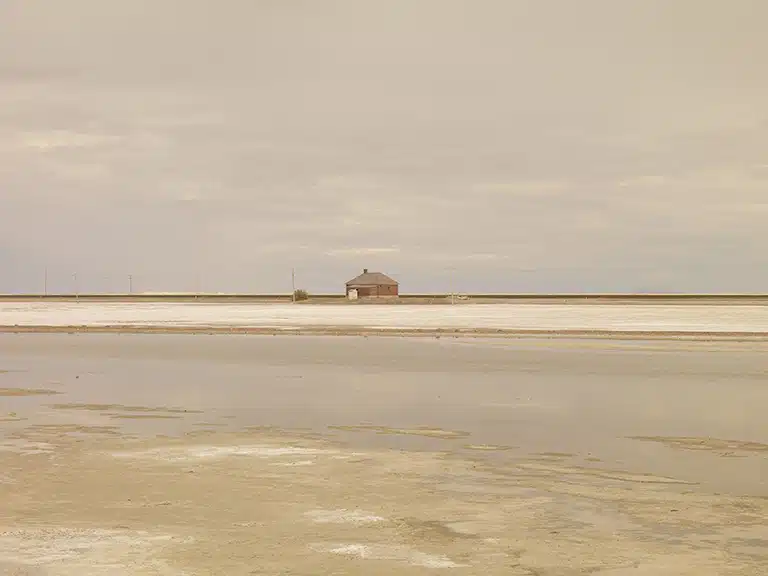
José Guerrero
Hwy-80 (House near Wendover), UT, 2011
De la serie «After the Rainbow»
Colecciones Fundación MAPFRE
© José Guerrero, VEGAP, Madrid, 2025
JUN.05.2025 – AUG.24.2025, MAD
José Guerrero
Concerning Landscape
Organized always in series, the photography of José Guerrero (Granada, 1979) presents itself as a continuous study of the representation and perception of landscape and architecture through the photographic image. With a significant use of light, color and atmosphere, his photographs transform iconic and historical places—such as La Mancha, Carrara, Sierra Nevada and the Thames—into dynamic settings that engage the cultural background of the viewer, evoking a poetic gaze filled with meanings and connotations.
This exhibition spans over 20 years of his career to date.
Felipe Romero Beltrán
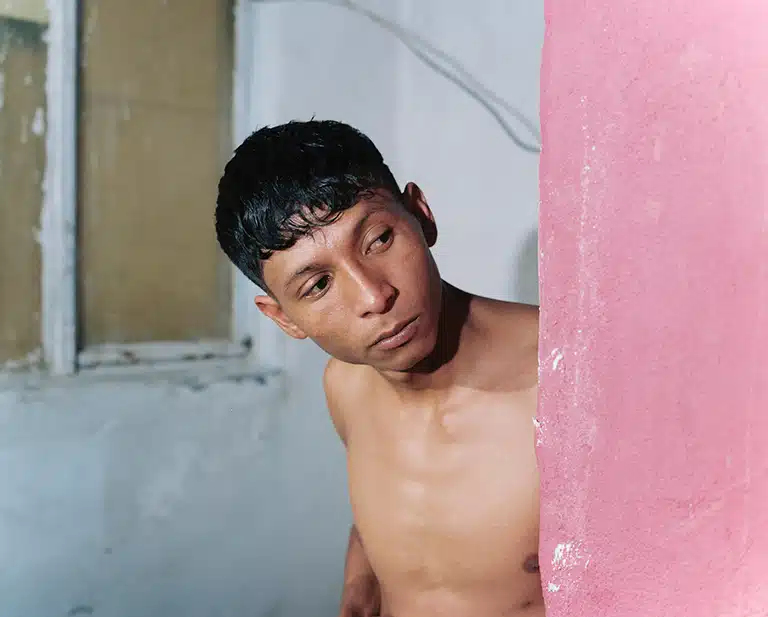
Amigo de El Friki y pared rosa
Bravo
© Felipe Romero Beltrán
JUN.05.2025 – AUG.24.2025, MAD
Felipe Romero
Bravo
Bravo was the winning project of the second edition of the international KBr Photo Award, launched by Fundación MAPFRE in 2021. As in many of his other works, Colombian photographer Felipe Romero (Bogotá, Colombia, 1992) invites reflection on a space of tension and conflict: the border between Mexico and the United States, specifically a stretch of the Río Bravo (known as the Rio Grande in the United States), which is part of the more than one thousand kilometers of division between the two countries. His images of people, landscapes and architecture form a sober visual essay on the idea of waiting and the complexity of border identity.
Nicholas Nixon
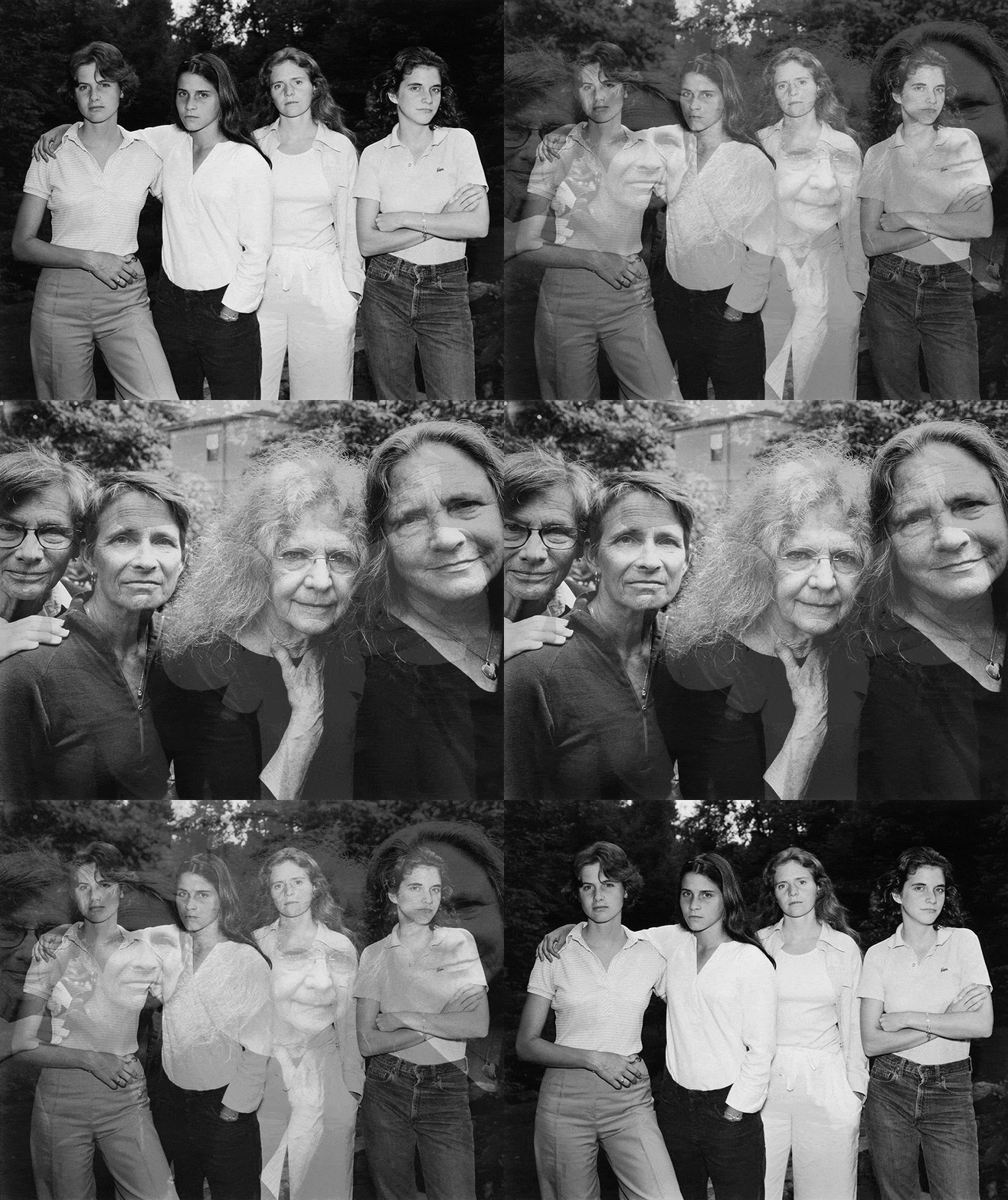
The Brown Sisters, 1975, 2022
Fundación MAPFRE Collections. © Nicholas Nixon
JUN.05.2025 – AUG.24.2025, MAD
Nicholas Nixon
The Brown sisters (1975-2022)
Nicholas Nixon (Detroit, 1947) stands out as an important figure in the history of contemporary photography. Celebrated for his deep and empathetic gaze, Nixon combined his artistic career with teaching at the Massachusetts College of Art until 2017. Among his most emblematic projects is The Brown Sisters (1975-2022), a series begun in 1975 that annually portrays his wife, Beverly Brown (Bebe), and her three sisters. With a refined technique and a deeply human gaze, Nixon turns the everyday into an emotionally powerful visual narrative and confronts us with one of the most moving depictions of the passage of time in the history of art.
With the image of the year 2022 Nixon has concluded the series, so this will be the first time it can be seen in Spain in its final version.
Edward Weston
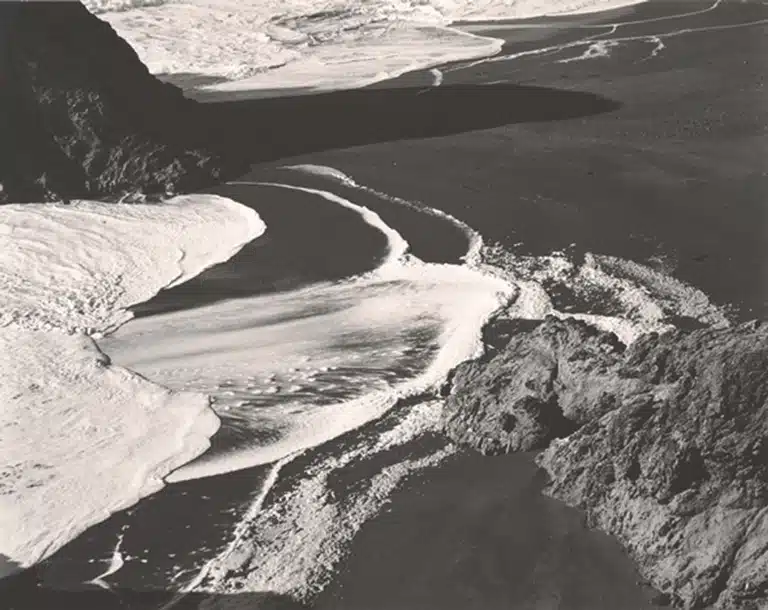
Surf, Bodega, 1937
Center for Creative Photography, The University of Arizona
© Center for Creative Photography, Arizona Board of Regents
JUNE.12.2025 – AUG.31.2025, BCN
Edward Weston
The matter of shapes
Strongly linked to the landscape and cultural history of North America, the work of Edward Weston (Illinois, 1886 – California, 1958) offers a unique perspective on the process of photography’s consolidation as an artistic medium. This extensive anthology spans all stages of his photographic production, from his initial interest in Pictorialism to his establishment as one of the central figures in affirming the poetic and speculative value of Straight Photography. A co-founder of the f/64 Group, his images are key to understanding the new aesthetics and the emerging American lifestyle in the United States during the Interwar period.
Exhibition organized with the support of the Center for Creative Photography at the University of Arizona, Tucson.
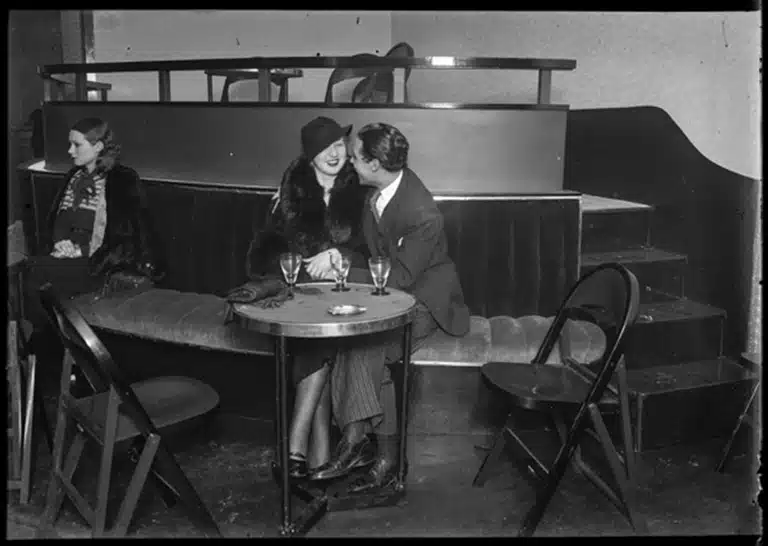
Puig Farran
A couple in a bar in Barcelona, 1931-1936
Arxiu Fotogràfic de Barcelona /
Archivo de la familia Puig Farran
JUNE.12.2025 – AUG.31.2025, BCN
Joan Andreu Puig Farran
A Decade of Turmoil (1929-1939)
A press photographer since 1929, Joan Andreu Puig Farran (Lleida, 1904 – Barcelona, 1982) worked for various newspapers published in Barcelona, such as La Humanitat, L’Opinió and La Vanguardia during the Second Republic. Due to this work, he was forced into exile in France in 1939; upon his return in 1945, he could not resume his work as a photojournalist. After his conviction and subsequent purging, he was able to return to photography, but only in the fields of advertising and tourism.
Puig Farran never had the opportunity to exhibit his photographs during his lifetime. This exhibition recovers his work from a period of significant social and political turbulence through a large number of period copies from the La Vanguardia archive, complemented by exhibition prints made from the glass plates preserved by his heirs, along with a selection of the newspapers in which his images were published.
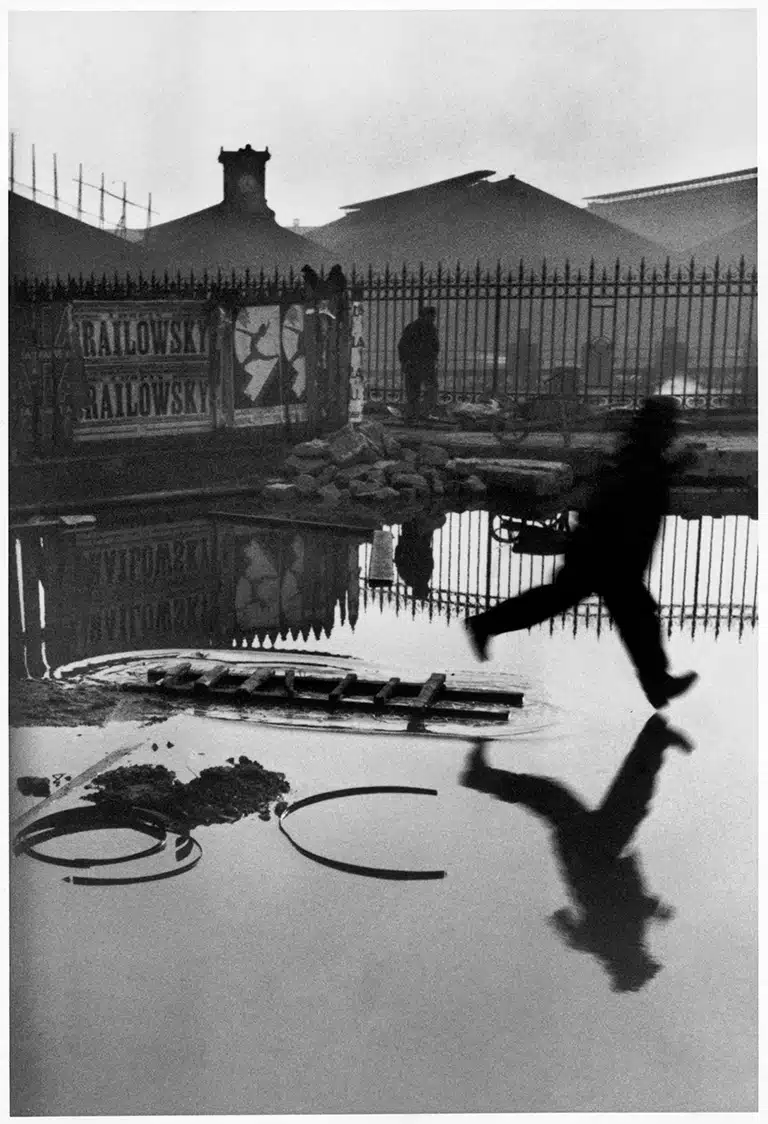
Henri Cartier-Bresson
Behind Saint-Lazare Station, Plaza de Europa, Paris, France,1932
© Henri Cartier-Bresson/Magnum Photos
Henri Cartier-Bresson. Watch! Watch! Watch!
– 25
Photo Arsenale Wien (Vienna, Austria)
Timeless. Observant. Instinctive.
Henri Cartier-Bresson (1908 – 2004), was a photojournalist, artistic photographer and portraitist, he crafted timeless compositions and shaped the style of later generations of photographers. In 1947, he founded the Magnum photo agency alongside Robert Capa, George Rodger and David “Chim” Seymour.
A patient and silent observer, yet nimble and expeditious, the artist captured scenes of people and key events in 20th-century history, earning him the nickname “the eye of the century”. With his talent for finding the “decisive moment”, he captured spontaneous encounters and situations and became one of the most important representatives of street photography. His works, many of which have become iconic today, depict, as if he were an anthropologist, some of the most important events of the 20th century.
With a diverse and varied oeuvre, the exhibition presented by Fundación MAPFRE traces his entire career; from his beginnings, influenced by Surrealism and the New Vision, through photojournalism, where some of his lesser-known reports from the 1960s are particularly noteworthy, to the intimate style of his later years.
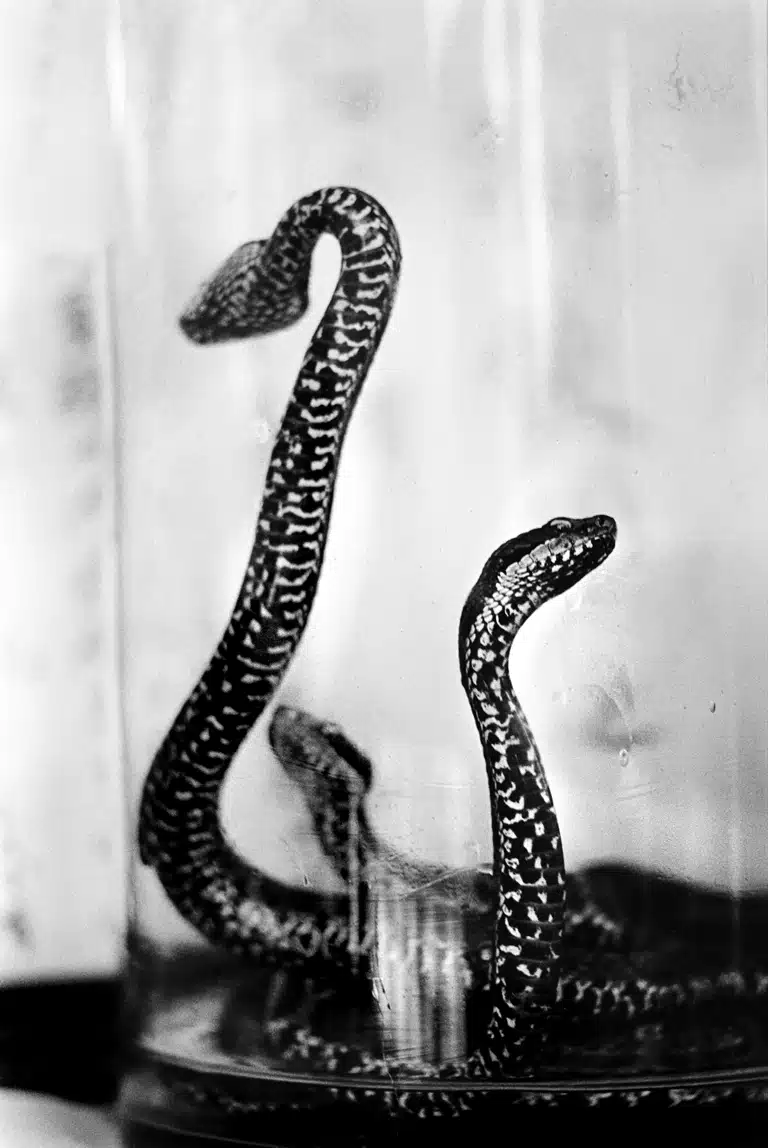
Christer Strömholm
Tokyo, 1961
© Christer Strömholm Estate
Christer Strömholm
– 30
Fundación Tony Catany (Llucmajor, Mallorca)
Humanism. Commitment. Social document.
In Mallorca, Fundación MAPFRE is presenting a retrospective exhibition on the photographer Christer Strömholm (Stockholm, 1918-2002), one of the most emblematic European photographers of the post-war period, whose work, imbued with humanism and social commitment, has a certain documentary character.
From a very young age, Strömholm traveled extensively around the world. After the war, in 1947, he returned to Paris, where he realized that photography allowed him to express himself in line with his desired style. From that moment on, he never stopped taking pictures. In his own words: “I don’t take photographs, I create images. That’s what I’ve done all my life.”
Strömholm finds valuable messages in everything, even in the most humble of objects, to which he gives meaning and resonance through his photographs, which are simply an extension of his own life.
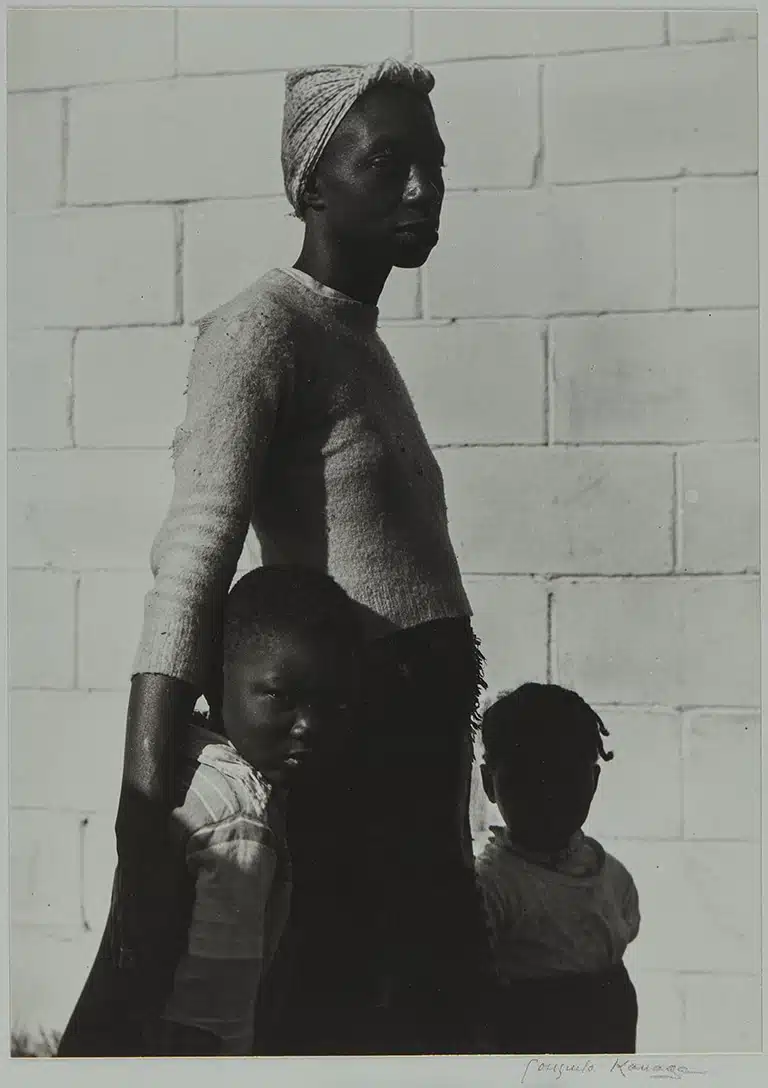
Consuelo Kanaga
She is a Tree of Life, 1950
Brooklyn Museum, gift of Wallace B. Putnam from the Estate of Consuelo Kanaga, 82.65.2250
© Brooklyn Museum
Consuelo Kanaga. Catch the Spirit
– 03
Brooklyn Museum of Art (New York, USA)
Modernity. Social justice. Unconventional.
This exhibition covers the six decades of work by Consuelo Kanaga (1894-1978), a key figure in the history of modern photography, both for her contribution to women being recognized in this field and for her images that confront the viewer with some of the major social issues of the 20th century.
The life and photography of this American photographer reflected her concern for social justice. She was truly interested in people and their problems: social marginalization, poverty, racial harassment, and inequality, especially in relation to the African American population in the United States.
An unconventional figure deeply committed to social justice, Consuelo Kanaga was ahead of her time. She worked as a photojournalist and was one of the few women to maintain close ties with the American avant-garde circles in San Francisco and New York.
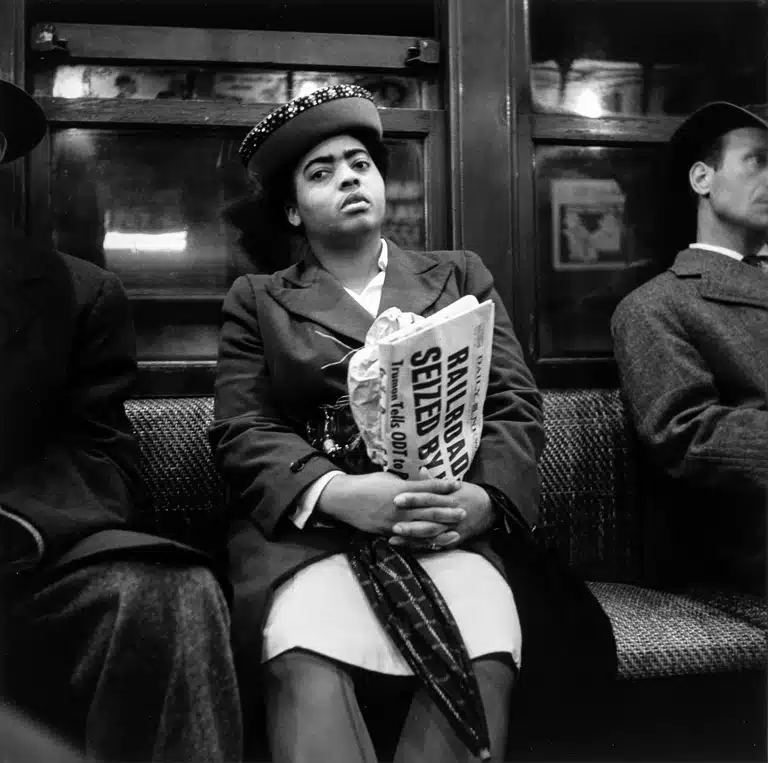
Louis Stettner
Woman Holding Newspaper, New York , 1946
Courtesy of the Louis Stettner Archive, Paris
© Louis Stettner Estate
Louis Stettner
– 08
Antiguo Instituto Jovellanos (Gijón, Asturias)
Poetry. Street photography. Lyrical humanism.
Louis Stettner (New York, 1922-Paris, 2016) trained at the New York Photo League school, where he studied under Sid Grossman and coincided with Weegee, who would become a great friend of his. In Paris he met Brassaï, who became his mentor. However, despite being fully immersed in the debate on historical photography for a good part of the last century, his work was not given the recognition it deserved at the time, perhaps because it did not adhere to a specific style.
Straddling New York and Paris, Stettner was rooted in two worlds at a time when most photographers could only relate to one. In this sense, his work contains aesthetic elements of both New York street photography, with its bustling subway scenes, and the lyrical humanism of the French tradition, with the mountainous landscapes of the Alpilles in France.